Introduction
People love to say discipline is something you’re just born with like some folks just pop out of bed at dawn and power through life without ever getting tired or bored. That’s not how it works. Discipline isn’t some mysterious trait. It’s a skill. And like any other skill, you get better at it with practice.
If you’ve ever tried to start a habit and quit after a few sloppy attempts, well, you’re in good company. Motivation fades fast. Discipline is what makes you keep going when you’d rather quit.
This 30-day guide isn’t about turning your life upside down in one night. It’s about starting small, making simple changes, and repeating them until they stick. By the time you’re done, you’ll notice your routines feel easier, your mindset feels tougher, and your actions feel more in your control.
Why Discipline Matters
Discipline means doing what needs to get done no matter how you feel.
Whether you're aiming to be healthier, get ahead at work, learn something new, or build a side hustle, discipline is what keeps you consistent.
If you lean on motivation alone, you’ll stop the moment things get hard. But if you’ve got discipline, you push through the rough days.
That’s why discipline matters so much.
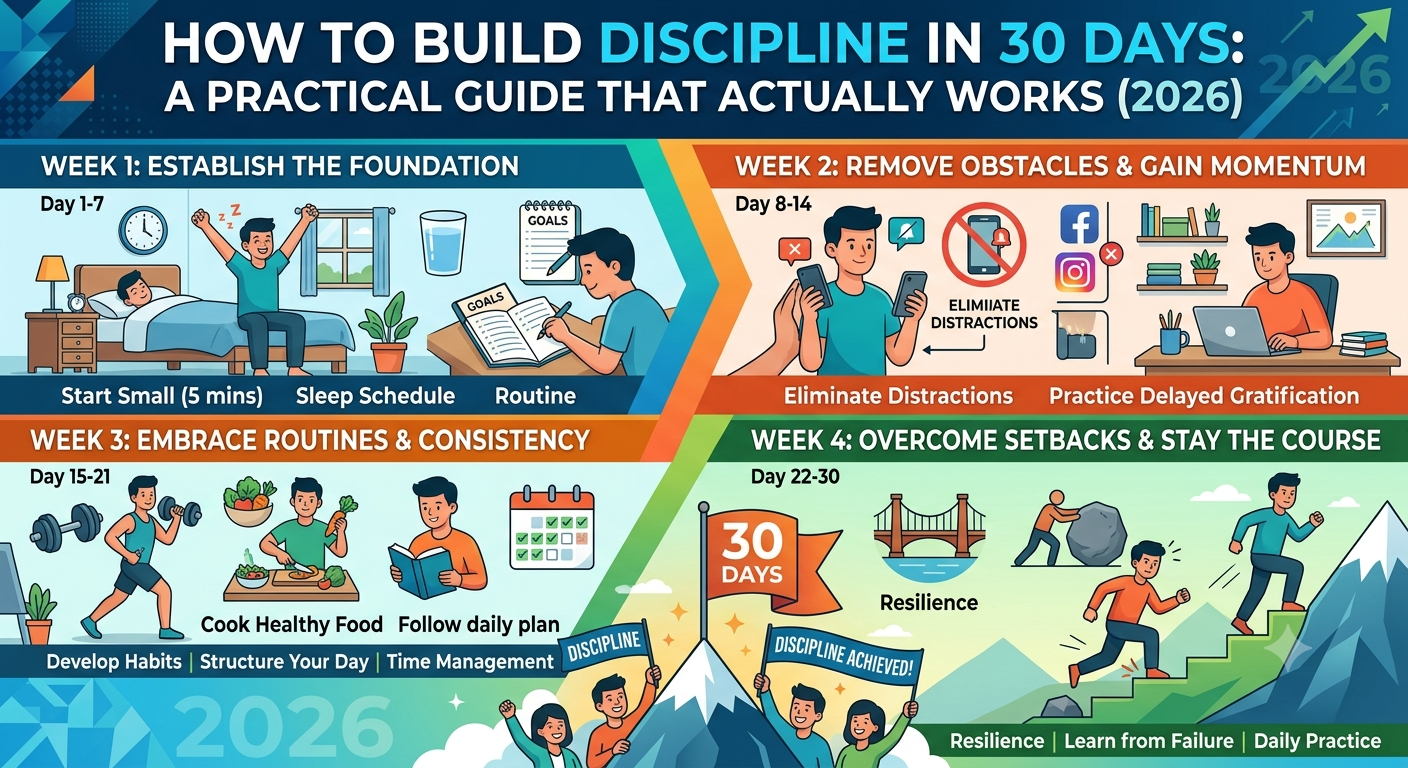
Week 1: Start Small
Most people bite off more than they can chew. Don’t do that.
Pick just one or two new habits. That’s it. Maybe:
- Wake up at the same time every day.
- Read for 10 minutes.
- Move your body for 15–20 minutes.
- Drink enough water.
- Spend 10 minutes planning your day.
The goal here isn’t to be perfect. Just show up for these habits, day after day.
Little wins make you feel capable. That feeling fuels discipline.
Week 2: Remove Distractions
Discipline gets a lot easier when you’re not fighting off temptations every five minutes.
Take a hard look at what eats up your time.
It’s usually things like:
- Scrolling through endless social feeds
- Non-stop phone buzzes
- “Just one more” episode or video
- Putting off what really matters
- Working in a mess
Cut these down by:
- Silencing notifications you don’t need.
- Keeping your phone far from your workspace.
- Using website blockers.
- Cleaning your desk.
- Giving yourself set times to check social media.
Staying disciplined isn’t just about iron willpower it’s about setting yourself up for easier choices.
Week 3: Create a Daily Routine
Discipline thrives on simple, repeatable routines.
If you don’t have to guess what to do next, you save energy and build good habits faster.
Here’s a bare-bones routine to try out:
Morning
- Wake up at the same time.
- Drink water.
- Stretch or move a bit.
- Look over your goals.
Afternoon
- Tackle your most important task first.
- Take real breaks not just scrolling breaks.
- Focus on one thing at a time.
Evening
- Reflect on how your day went.
- Get things ready for tomorrow.
- Go to bed at a set time.
Don’t overcomplicate it. The simpler your routine, the more likely you’ll stick with it.
Week 4: Keep Your Promises to Yourself
This is where it all comes together.
Every time you do what you said you’d do even the small stuff you build trust with yourself.
That means:
- Finishing your workout
- Reading a chapter you planned
- Logging off when you said you would
- Sticking to your study session
- Turning in early if you promised yourself you would
Don’t beat yourself up if you mess up once. Just don’t make it two days in a row.
It’s not the bad day that wrecks your progress it’s giving up that does.
Simple Daily Habits That Build Discipline
You don’t need a fancy system. Start with basics:
- Wake up at the same time every day.
- Make your bed.
- Move your body for 20 minutes.
- Read 10–20 pages.
- Write down your top three tasks.
- Finish something important before checking social media.
- Drink enough water.
- Sleep at least 7–8 hours.
- Take five minutes to reflect at the end of the day.
They sound easy, but put together, these habits pay off big.
Common Mistakes to Avoid
People trip up because they expect fast change. Don’t fall into these traps:
- Trying to overhaul your whole life at once
- Depending only on bursts of motivation
- Comparing yourself to others
- Quitting after a single rough day
- Setting wild, unrealistic goals
Real progress comes from showing up, day after day not perfectly, just consistently.
What Happens After 30 Days?
Stick with this for a month and you’ll notice:
- You can focus longer
- You actually get stuff done when you said you would
- You start trusting yourself more
- Managing your time feels easier
- You feel healthier, mentally and physically
- You procrastinate less
- You bounce back from setbacks faster
You won’t be a totally new person, but you’ll believe in your ability to keep moving forward. And that changes everything.
Final Thoughts
Discipline isn’t about being a machine. It’s about choosing what’s right for you, more often than not.
You don’t need endless willpower. You don’t need to wake up inspired every morning. You just have to show up even on the days you’d rather not.
Pick one habit. Do it today. Then do it again tomorrow.
Let that snowball grow. Within 30 days, you’ll look back and be glad you didn’t wait for motivation to carry you. you built discipline by showing up.
The life you want? It’s built one daily habit at a time.
Frequently Asked Questions (FAQs)
- Can I really build discipline in 30 days?
Absolutely. It won’t be perfect or complete, but one month of steady work builds a foundation and real momentum. - What if I miss a day?
It happens. The important thing is to get back at it the next day. Don’t let one slip become a full stop. - Is motivation necessary?
Motivation helps you start, but discipline is what makes you finish. - What’s the easiest habit to start with?
Keep it simple. Wake up at the same time, walk for 20 minutes, or read for ten. - How do I stay disciplined long-term?
Stick to routines that aren’t complicated, keep distractions in check, track what matters, and focus on consistency not perfection.
Disclaimer & Growth Note: Milestone Journey is a multi-disciplinary ecosystem dedicated to continuous improvement across full-stack development, high-performance SEO, execution strategies, and lifestyle optimization. While every article is designed to deliver tactical, actionable value to upgrade your digital projects and workflows, insights are synthesized from evolving research, documentation, and dynamic codebase updates. Content is provided strictly for informational and educational purposes.
Discussion (0)
Leave a Reply
No confirmed discussions contributed yet. Be the first to start the thread!