Introduction
Public speaking isn’t just useful it’s a game changer. Whether you’re at work pitching ideas, leading a meeting, speaking in class, or filming a video for the internet, being able to get your point across with confidence opens all kinds of doors.
And here’s something people forget: you’re not born a great public speaker. It’s all about practice and picking up the right strategies. Even folks who look like naturals have spent plenty of time figuring out what works for them.
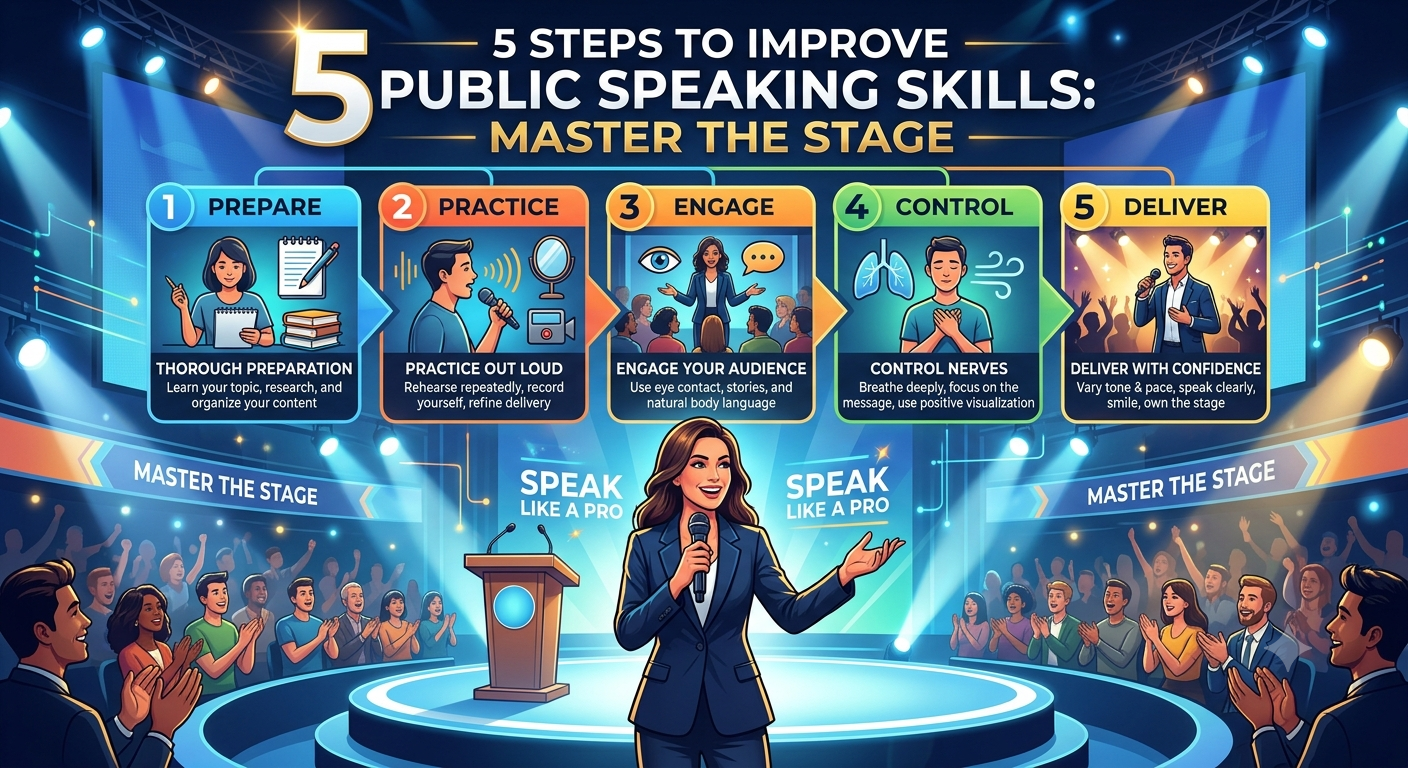
This guide gets right to the point five steps you can actually use to become a more confident, effective speaker.
1. Really Know Your Topic
Confidence starts before you ever open your mouth. Dig into your subject until you really get it. Could you explain it in simple words to a friend who knows nothing about it? If not, you’ve got more research to do.
Lay out your main ideas and make a short outline. Jot down the big points you need your audience to remember. When you know your material cold, you can stop worrying about your words and start focusing on people.
Some ways to prep:
- Research your topic like you mean it.
- Outline your main points.
- Practice talking through your ideas, no notes allowed.
- Think of questions people might ask and decide how you’ll answer.
2. Practice A Lot
The more you speak, the easier it gets. There’s no shortcut here. Practice actually speaking out loud alone, in front of a mirror, recording yourself, or with family. Notice what works. Notice what feels awkward. Adjust.
Recordings are especially helpful. You catch things you’d miss, like talking way too fast, using “um” every five seconds, or never looking up.
Try this:
- Record yourself and play it back.
- Join a group like Toastmasters or start a speaking club with friends.
- Run through your talk several times; switch up the order of your points.
- Don’t memorize focus on explaining, not reciting.
3. Pay Attention to Body Language
Talking isn’t just about words. People will read your posture, your hands, your face, and your eye contact, sometimes more than your actual sentences.
Try standing up straight. Let your hands move naturally don’t force yourself to be stiff or over-the-top. Look people in the eye, even just for a second at a time. All these little things make you look (and feel) more confident, even if you’re freaking out inside.
How to tweak your body language:
- Stand tall, don’t slouch.
- Let yourself smile now and then.
- Make eye contact, bouncing from person to person.
- Use your hands when it makes sense.
- Don’t cross your arms or fidget endlessly.
4. Speak Clearly and Don’t Rush
Nerves? Everyone gets them. But most of us deal with nerves by speeding up and mumbling. Instead, slow down. Take a breath.
Say your words so they’re easy to understand. Drop in a pause after something important give it a second to land. Change your tone or volume now and then to keep things interesting. Speaking at a comfortable pace actually calms you down and keeps people listening.
Keep in mind:
- Slow your words they’re just as important as your ideas.
- Pause. Let people process.
- Cut out “um,” “uh,” and any unnecessary fillers.
- Make sure everyone can hear you.
5. Learn as You Go
No speech is perfect, and that’s fine. Every time you present, you get more comfortable. Right after, think for a minute: what went well? What just felt awkward? Did you lose your place, or did the audience look bored? Figure out why.
Ask a few trusted people for their honest thoughts. Don’t get defensive this is how you get better.
Some questions to check yourself:
- Was my point clear enough?
- Did I project confidence, or do I need to work on that?
- Did people look engaged, or did I lose them?
- What’s one thing I’ll do differently next time?
Common Mistakes to Watch For
Even pros make mistakes, so don’t let it get you down. The faster you spot these, the quicker you’ll improve:
- Reading word-for-word off slides.
- Rushing through the talk.
- Not making eye contact.
- Leaning on “um,” “uh,” and other fillers.
- Trying to memorize every line no good.
- Ignoring how your audience reacts.
- Skipping practice sessions.
Why Bother? The Payoff’s Real
Strong public speaking skills change lives. Here’s what you get:
- Way more confidence.
- More chances for promotions and new jobs.
- Sharper leadership abilities.
- Better overall communication in any room.
- More influence, more credibility.
- Easier networking and making new connections.
Conclusion
Public speaking really does get easier the more you do it. You don’t have to be the next big TED speaker just keep learning, speaking, and tweaking how you present.
Know your topic backward and forward. Practice until you’re comfortable. Pay attention to your body and voice, and learn something new from every single speaking chance. Every expert started as a beginner. Your next talk is just another step in getting where you want to go.
Frequently Asked Questions
1. How do I get over my fear of speaking in public?
Start small with friends or a mirror. Prepare well so you know what you want to say. Focus more on your message than on your nerves confidence builds bit by bit.
2. How much should I practice?
As often as you can. Even ten minutes a day helps you improve way more than you’d think.
3. What’s the biggest rookie mistake?
Trying to memorize every single word. It usually makes you sound stiff, and it’s harder to adjust if you lose your place.
4. How do I make my talks more interesting?
Tell a quick story, use examples, ask questions, and mix up your speaking style. Make eye contact and have a conversation, not a recitation.
5. Can anyone learn to be a good speaker?
Absolutely. With regular practice and feedback, anyone can build the skills to speak confidently in front of a group.
Disclaimer & Growth Note: Milestone Journey is a multi-disciplinary ecosystem dedicated to continuous improvement across full-stack development, high-performance SEO, execution strategies, and lifestyle optimization. While every article is designed to deliver tactical, actionable value to upgrade your digital projects and workflows, insights are synthesized from evolving research, documentation, and dynamic codebase updates. Content is provided strictly for informational and educational purposes.
Discussion (0)
Leave a Reply
No confirmed discussions contributed yet. Be the first to start the thread!